Sunday, January 8, 2012

Self-regulation Training Book Now Available!


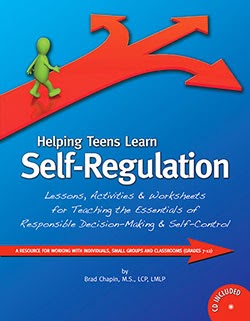
After several requests, we are proud to announce that the Self-regulation Training information is now available in a workbook.

"Helping Young People Learn Self-regulation" is now available through Youthlight Publishing. Self-regulation includes a universal set of skills necessary for academic success, emotional control and healthy social interaction. With this single resource you will be able to address children's anger problems, academic performance challenges, anxieties, school safety issues, self-esteem, social skills and much more.

As the term “self-regulation” suggests, this approach focuses on teaching children how to regulate their own emotions and behaviors. The authors have split the self-regulation training process into three functional area: physical, emotional, and cognitive. Using strategies based soundly upon the evidence base of cognitive-behavioral psychology, this resource will help you move children progressively through skill areas in each of these three domains.

Please contact author/trainer Brad Chapin, LCP, LMLP for more information about conducting a training in your area.
Brad.chapin@cpschallenge.com

Thursday, December 8, 2011

Give the Gift of Self-regulation to a Child this Season

Teaching your children to regulate their own emotions is a gift that will stay with them throughout their lives and help them reach their goals. We all run into difficult situations, even during the holidays. These situations are perfect opportunities to model for our children how to handle stress.

Hopefully you will have some extra time to spend with your children this holiday season. Here are a few simple things you can do to improve your child's self-regulation:

  • Take a little extra time to spend one-on-one with your children. It's easier to hear what they have to say and to communicate what you would like for them to hear from you when there are just two of you.
  • Tell stories of your family traditions and how they came to be. Family traditions provide a child with a strong sense of identity and connectedness that serve as the foundation for healthy self-control.
  • Communicate the need to be thankful for what they have, and the importance of helping others. The holiday season provides opportunities to give back to those who may be less fortunate.
  • Try and remember to "guide" children to come to a healthy conclusion when they struggle with social/emotional issues. We are often too busy, or have a strong desire to "fix" things quickly. Helping children learn to problem-solve on their own is a skill that will help them to be more successful no matter what challenges they may face.
Taking a few minutes to help your children learn self-regulation is a gift that will continue to produce rewards in all areas of their lives. Those who regulate well are more successful:
  • in social relationships
  • in school with better grades
  • in self-care and physical health
  • in sports
  • at achieving their goals
  • in life in general 
Enjoy your holiday season and give a gift that truly keeps on giving.

Brad Chapin, LCP, LMLP
brad.chapin@cpschallenge.com

Sunday, September 4, 2011

Computer-assisted Counseling Resources for Children

Children are spending the majority of their waking hours interacting with technology. Why aren't we aggressively tapping into this time and using their interest to teach them useful skills?

To engage today's youth, we adults must be aware of the youth culture. What do you think a child would do if you gave them the option to learn something in a workbook, or learn it while interacting with a computer?

Resources that involve videos and interactive games engage children on "their turf." They feel less threatened because the technology is familiar to them. Their defenses are often lower when watching, or interacting, with characters in a computer program because it's less direct. They are able to relate to the situations and characters, but it's much less intimidating than a direct line of questioning.   

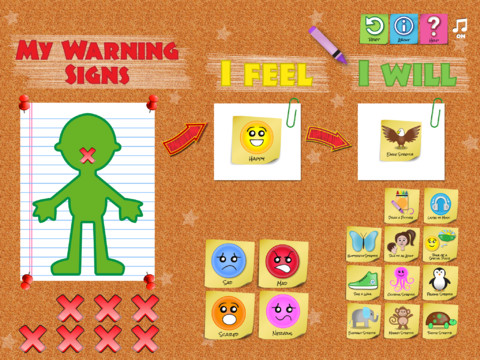
We have been noting the benefits of computer-assisted counseling techniques for several years while developing the Challenge Software Program for children (a program that uses video scenarios and games to teach children the basics of self-regulation). From our experience, there is really no comparison between the engagement of children when it comes to computer-assisted counseling techniques and traditional interventions. If you don't believe it, ask a child. Or better yet, try it for yourself:)


Brad Chapin, LCP, LMLP
brad.chapin@cpschallenge.com  

Wednesday, August 24, 2011

Using REBT to Promote Self-reguation in Children


The Challenge Software Program for children was designed to help children establish healthy thinking patterns and learn to identify and effectively challenge thoughts that are unhealthy.
Over the past few years this program has helped hundreds of children do just that. We continue to hear examples where the program is being used to help children struggling to learn how to regulate their mood and behavior. These examples come from children who have experienced trauma, depression, anxiety, and numerous other issues.
Here is an example submitted by one of the children using the Challenge Software Program. Think about how powerful this change in thinking will be for this child.
"I remember a family friend giving me and my friend a bath when we were young.
He put us in the tub and touched me in ways he shouldn't have.
The child reports thinking, "Oh...this is terrible. I am bad and feel worthless."
After using the Challenge Software Program and understanding that she can control her own
thoughts and feelings about herself, she writes a new belief:
"It was not my fault. I was a small child. I can be okay even though a bad
thing happened to me."
I recently presented at an Innovative Counseling conference in San Antonio (click here for slides from the presentation on slideshare). It was great to see the innovation and creativity that is still alive in developing new tools to reach the children of today. It was also great to see that these creative strategies are based soundly on solid approaches like Rational Emotive Behavior Therapy (REBT).
We must continue to innovate and create new ways of reaching today's youth. If we do not help them create and maintain healthy beliefs, they will struggle to regulate their mood and behavior their entire lives.
Brad Chapin LCP, LMLP

Saturday, January 15, 2011

3 Reasons Why Every Parent Should Know about Self-regulation Training


As parents, we receive lots of advice about the "Do's and Don'ts"of parenting. It's sometimes difficult to know what to do with our children.

Maybe we should just start by asking what we would wish for our children. Check out this list of wishes:
  1. I want my children to live a long life


  2. I want them to be healthy and happy


  3. I want them to be successful

I think many parents would include these items in their top 5 wishes for their children. Please feel free to comment if you have other wishes for your children that you would like to share.


The question is, "As parents, what can we do to help make this list of wishes become a reality?" This question is quickly followed by, "How much time and energy do I have as a parent to learn everything about parenting, and how will I be able to apply all of that information to help these wishes come true?"

As a parent of 3 myself, I strongly believe in usefulness and practicality. If it's not realistic or practical to implement, it's just not happening. Thankfully, there is a relatively simple and straightforward set of skills that we can help our children develop. A healthy dose of Self-regulation is related to:


  • Longevity - self-regulation is highly correlated with living longer


  • Academic Success - self-regulation predicts academic success better than IQ


  • Health and Wealth - those that learn to regulate themselves fair much better


If we focus our efforts on teaching our children how to regulate their own thoughts, behaviors and emotions, we will give our children the best chance of reaching their potential, and realizing the wishes we have for them. The great thing about this concept is that Self-regulation can be taught:)


Brad Chapin, LCP, LMLP brad.chapin@cpschallenge.com

Monday, January 3, 2011

Autism Spectrum Disorders and Self-regulation

With statistics from the Center for Disease Control now indicating Autism Spectrum disorders being present in approximately 1 out of every 110 births, questions about treatment strategies continue to rise.

As we know, children with Spectrum disorders often struggle with:
  • Social interaction


  • Moderating sensory responses


  • Appropriate Emotional responses


  • Communication

Each of these areas directly relates to Self-regulation. For example, having an average, or moderate, response when someone says "Hello" works much better socially than saying nothing, or shouting. In social situations, being able to appropriately regulate ones response can have a significant impact on making and keeping friends.

When addressing Self-regulation issues, it can be helpful to simplify the behaviors down into two main categories:

  1. Over-responding: An extreme outward response to an event that most individuals would see as ordinary (e.g. - Screaming when a door opens)


  2. Under-responding: Little or no response to something that most individuals would have an external response to (e.g. - Eye contact, social greetings or pain)

When assisting children with special needs, we spend a great deal of time working on eliminating "extreme" responses to neutral stimuli (e.g. - sounds, clothing or transitions).

Many people draw upon Behavioral interventions (eliminating triggers, applying consequences, modeling, etc.) to reduce these extreme responses.

However, it's also important to address the Emotional and Cognitive aspects of Self-regulation to increase the chances of success. This can include:

  • Teaching the child how to implement his/her own appropriate calming techniques


  • Breaking interactions down as they happen to process responses together


  • Utilizing stories, games, and videos to teach appropriate emotional expression

Our goal as parents is for our children to be able to regulate themselves effectively. This process happens over time and on a continuum. Be sure to remind yourself that any movement down the continuum toward Self-regulation is a step toward Success:)

*If you work with children who have an interest in computers or technology, it may be beneficial to use an intervention tool like the Challenge Software Program to help engage them in the process.


Brad Chapin, LCP, LMLP

email: brad.chapin@cpschallenge.com

Sunday, December 12, 2010

Outcomes & Evidence-based Interventions are on Everyone's Mind

For or better or worse, the days of selecting interventions that we "feel" are going to work are over.

Having a solid framework has never been more important. Our framework for working with children needs to be soundly based on outcomes and research. In addition to these pressures, are the ever-increasing demands to do More in Less time and with Less resources.


I believe that is why so many of us have migrated toward the use of Cognitive-behavioral psychology. I also believe that these pressures have forced us to address "global" themes of behaviors (like self-regulation) that can affect many areas of functioning to maximize the effectiveness of our interventions.


The model in the picture above is soundly based on Cognitive-behavioral psychology and encourages addressing Self-regulation to maximize results in several areas. This practical framework provides an Evidence-based approach, but still allows for creativity in the selection of specific interventions that are consistent with the philosophy.
Improving Self-regulation can impact a broad variety of issues including:
  • Academic Success
  • ADHD symptoms
  • Behavioral issues
  • Mood problems
  • Self-esteem
  • Social Skills
This list is not complete, but it's an indication of how targeting Self-regulation and training children how to better regulate themselves can impact their level of functioning in many areas.
The Challenge Software Program utilizes technology and animated scenarios to engage children quickly and teach them the basics of Self-regulation.
by Brad Chapin LCP, LMLP